Short answer
Turkey sausage is ground turkey mixed with salt, herbs, spices and some fat, then shaped into links, patties or loose ground meat. It cooks quickly, dries out easily, and is safe once the center reaches 165 degrees Fahrenheit.
Turkey sausage is ground turkey mixed with salt, spices, herbs and a little fat, then shaped into links, patties or loose bulk meat. It cooks faster than most sausages and dries out easily, so gentle heat and a thermometer matter. This guide explains what goes into turkey sausage, how to cook it, how it differs from beef sausage, and how it fits a Texas meat market kitchen.
What is turkey sausage made of?
Turkey sausage is made from ground turkey, salt, seasoning and usually some added fat or skin so the meat does not turn crumbly. Makers use dark meat, white meat or a blend of both, and the blend changes the texture a lot.
Dark meat from the thigh and leg gives a juicier link with a fuller flavor. White breast meat on its own makes a drier, milder sausage. Many commercial products mix the two and add water, binders or starch, which is why ingredient lists differ from brand to brand.
The seasoning decides the style. Common versions include:
- Breakfast style: sage, black pepper and a little sweetness, usually sold as patties or bulk meat.
- Italian style: fennel seed, garlic, paprika and red pepper flakes, sold as links.
- Smoked or Cajun style: cayenne, garlic, onion and paprika, often smoked and fully cooked.
These descriptions are general, and every maker uses its own recipe, so the label is the only reliable guide to what a particular package contains.
Is turkey sausage raw or cooked when you buy it?
Turkey sausage can be either raw or fully cooked, and the package says which. Raw links and patties sit in the fresh meat case and must be cooked through, while smoked and pre-cooked links are sold ready to reheat.
Raw sausage is soft, pale pink and moist. Pre-cooked sausage is firmer, often browned from smoking, and usually carries a “fully cooked” line on the label. If you are buying from a counter, ask the seller whether the links are fresh or smoked. Never assume, because cooking a raw link for the time that a pre-cooked link needs will leave the center unsafe.
How do you cook turkey sausage so it stays juicy?
The way to cook turkey sausage so it stays juicy is medium heat, a small amount of oil and an internal temperature check, because high heat dries the meat before the middle cooks. Poultry should reach 165 degrees Fahrenheit (74 degrees Celsius) at the thickest point.
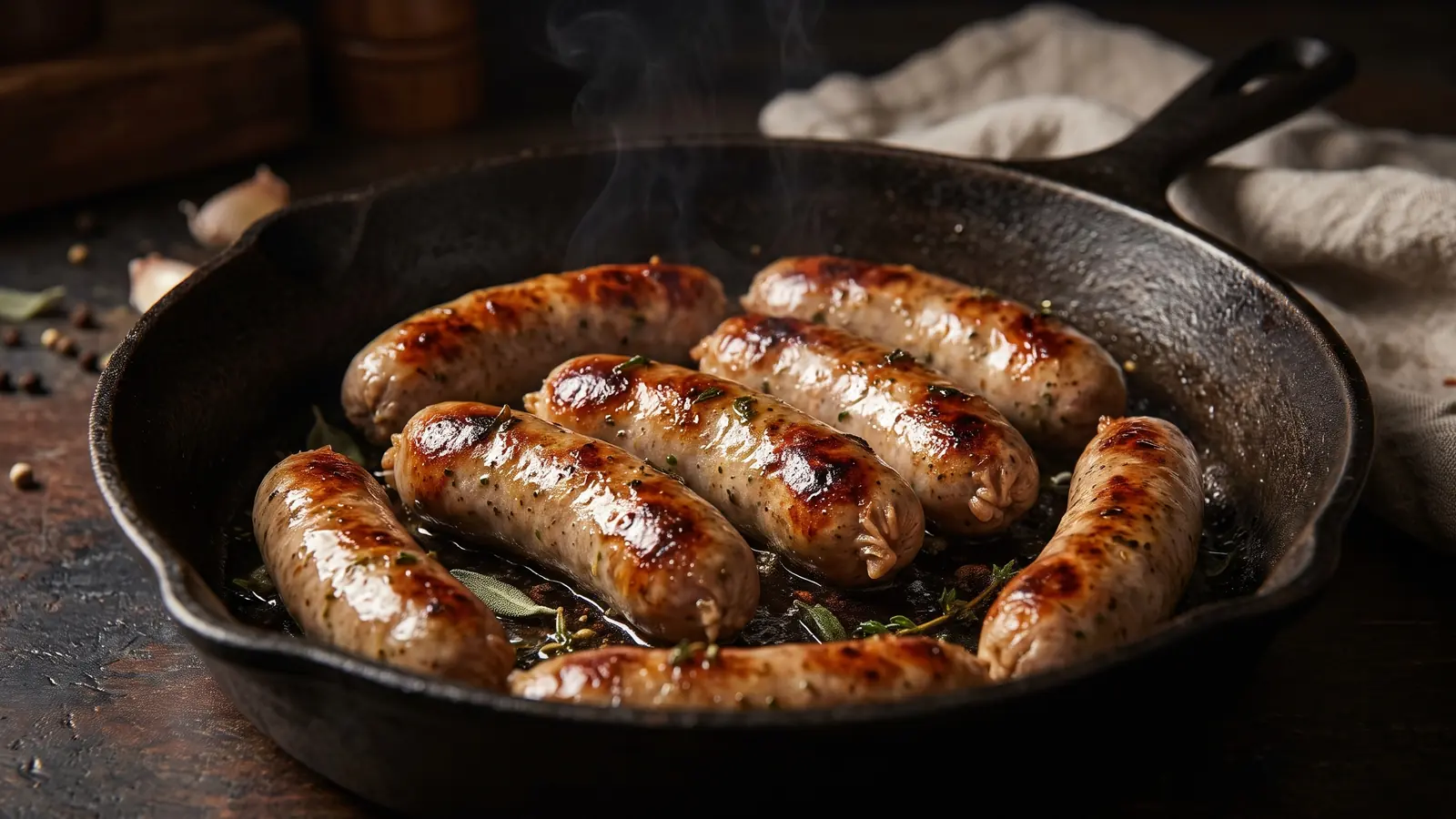
Here is a reliable skillet method for raw links:
- Warm a skillet over medium heat and add a teaspoon of oil.
- Lay the links in the pan without crowding them.
- Turn the links every two to three minutes so they brown on all sides.
- After about ten minutes, add a splash of water or stock and cover the pan for three minutes to finish cooking through.
- Check the center with a thermometer. Remove the links at 165 degrees Fahrenheit.
- Rest the sausage for three to five minutes before slicing.
Prick the casing only if the links are splitting, because pricking lets juices escape. Patties cook in four to five minutes per side on the same heat.
What are the other ways to cook turkey sausage?
Turkey sausage can also be baked, grilled or simmered, and each method suits a different dish. Baking is hands-off, grilling adds smoke, and simmering keeps the links tender inside a sauce.
| Method | Heat | Time for raw links | Best for |
|---|---|---|---|
| Skillet | Medium | 12 to 15 minutes | Breakfast plates, sandwiches |
| Oven | 400 degrees Fahrenheit | 20 to 25 minutes | Batches for a crowd |
| Grill | Medium, indirect | 15 to 20 minutes | Cookouts, with grill marks |
| Simmer in sauce | Low | 15 to 20 minutes | Pasta, beans, soups |
Times vary with the thickness of the link, so the thermometer always has the final word. Pre-cooked links need only five to eight minutes to heat through in any of these methods.
Turkey sausage vs beef sausage: what is the difference?
Turkey sausage is milder, softer and drier than beef sausage, which is richer, coarser and more fatty. Both can be seasoned the same way, but they behave differently in the pan.
| Turkey sausage | Beef sausage | |
|---|---|---|
| Flavor | Mild, takes on the seasoning | Deeper, beefy |
| Fat | Lower, so dries faster | Higher, so stays moist |
| Texture | Soft, fine grind | Firmer, often coarse |
| Safe temperature | 165 degrees Fahrenheit | 160 degrees Fahrenheit for fresh |
| Smoking | Works, but needs care | Holds up well |
A cook who wants a traditional smoky Texas link usually reaches for beef. A cook who wants a lighter breakfast patty or a pasta sausage reaches for turkey. Neither is the better product in general; the right choice depends on the dish.
What dishes use turkey sausage?
Turkey sausage works in any dish that normally takes a mild sliced or crumbled sausage. Soups, rice dishes and skillet meals are the easiest places to start.
- Pasta: brown crumbled sausage, add tomatoes and garlic, and toss with penne.
- Gumbo and jambalaya: smoked turkey sausage stands in for heavier links in Cajun pots.
- Red beans and rice: sliced smoked links simmer with the beans.
- Breakfast plates: patties with eggs and toast.
- Sheet pan dinners: links roasted with peppers, onions and potatoes.
- Stuffing and dressing: crumbled sausage browned and mixed into cornbread dressing.
Because turkey sausage is mild, it needs seasoning from the rest of the dish. Add smoked paprika, garlic, black pepper or a pinch of cayenne to the pot.
How do you store and freeze turkey sausage?
Raw turkey sausage keeps in the refrigerator for a day or two and in the freezer for a couple of months, while cooked sausage keeps for three to four days in a sealed container. These are general food-handling guidelines, and a package label with a use-by date overrides them.
Freeze links flat in a sealed bag with the air pressed out. Thaw them in the refrigerator overnight, never on the counter. A vacuum sealer helps if you buy in bulk, but a freezer bag works. Cooked sausage can be frozen too, though the texture softens a little.
What mistakes make turkey sausage taste bad?
The main mistakes are cooking over high heat, skipping the thermometer and judging doneness by color. Each one leaves the sausage dry, split or undercooked.
- Charring the outside while the center stays raw.
- Cooking straight from frozen on a hot surface.
- Piercing every link with a fork.
- Serving without resting, so the juices run out.
- Using lean breast-only sausage in a dish with no sauce or fat to help.
Fixing any of these usually improves the result immediately.
Does Bud’s House of Meat sell turkey sausage?
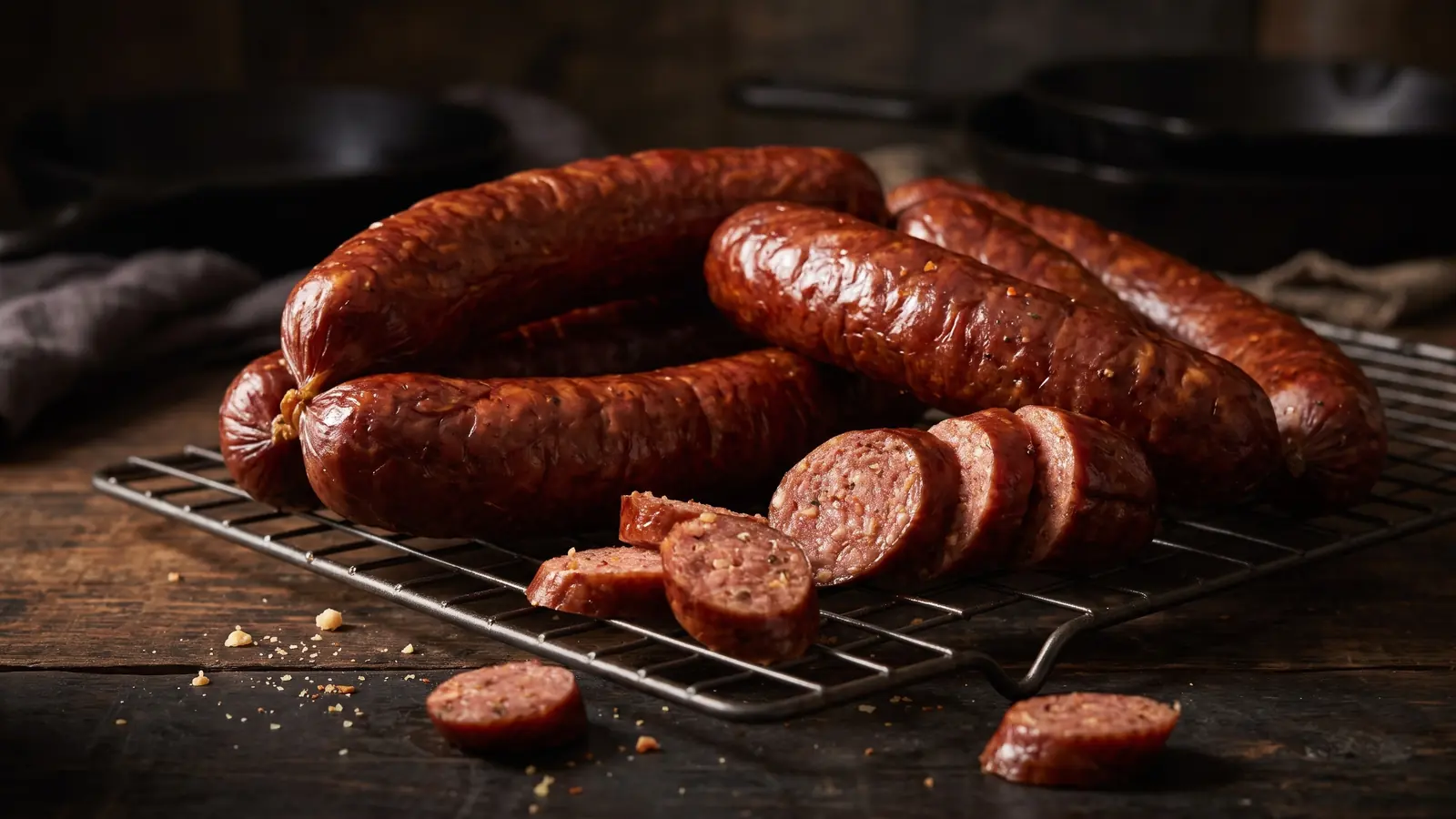
Turkey sausage is not on the recorded menu of Bud’s House of Meat in Houston. The ordering page read on November 11, 2026 lists smoked turkey breast, a Turkey Dinner, a Turkey Leg Dinner and a Turkey Sandwich, plus Beef Sausage by the pound.
For reference, the Clover page listed Beef Sausage (1 lb) at $9.95. The fresh meat counter is not itemised online, so the store is the only way to find out whether it stocks fresh turkey sausage. See the menu page for the recorded items and the hours and location page before you call or visit. Prices can change, and this guide takes no orders.
Common questions
Is turkey sausage cooked when you buy it?
It depends on the product. Fresh links and patties are raw and must be cooked through, while smoked or pre-cooked links only need reheating. Read the package or ask the seller, because the two types look alike but need different handling.
What temperature should turkey sausage reach?
Poultry is considered safe at an internal temperature of 165 degrees Fahrenheit (74 degrees Celsius), measured in the thickest part of the link. A probe thermometer is the most reliable way to check, because color alone can mislead you.
Can you swap turkey sausage for beef sausage in a recipe?
Usually yes, in soups, pasta, rice dishes and breakfast plates. Turkey sausage is milder and drier, so add a little oil to the pan, cook it gently, and season the dish a bit more boldly than you would with beef.
Why does turkey sausage turn dry?
Turkey has less fat than most red meat, so the links lose moisture quickly over high heat. Cooking on medium heat, keeping the casing intact until the end, and resting the sausage for a few minutes all help.
Can you freeze turkey sausage?
Yes. Wrap links or patties tightly or freeze them in a sealed bag, then thaw them in the refrigerator before cooking. Texture can soften slightly after freezing, so use thawed sausage in sauces or skillet dishes where that matters less.
Looking for the basics? Bud's House of Meat address and opening hours are on the home page.
This article is general information from an independent guide, not from Bud's House of Meat itself. For the store’s current details see hours and location.