Short answer
Cuts of beef come from the main sections, or primals, of the animal: chuck, rib, loin, sirloin, round, brisket, plate, flank and shank. Tender cuts from the middle suit quick, hot cooking, while tougher cuts from the front and back need slow, moist or smoky cooking.
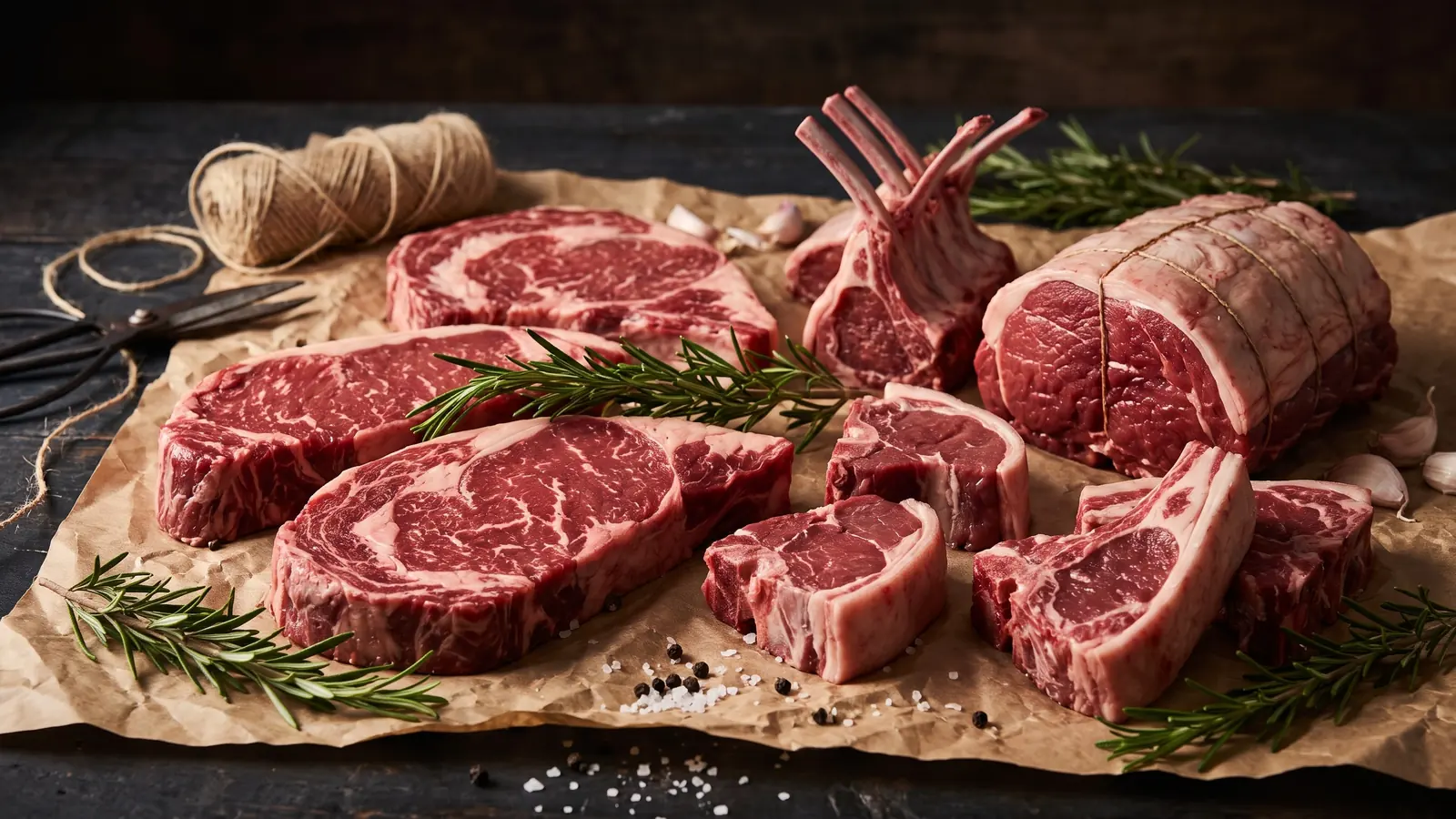
Cuts of beef come from the main sections of the animal, called primals, and where a cut sits on the animal largely decides how tender it is and how it should be cooked. The muscles along the back do little work and make tender steaks, while the legs, shoulder and chest work harder and make tougher meat that rewards slow cooking. This guide lays out the main cuts, which methods suit them, and how that connects to the beef items on the recorded menu of Bud’s House of Meat in Houston.
What are the main cuts of beef?
The main cuts of beef are the primals: chuck, rib, loin, sirloin, round, brisket, plate, flank and shank. Charts differ slightly, and some combine sirloin with the loin, so you may see eight primals instead of nine.
A butcher breaks each primal into smaller retail cuts such as steaks, roasts and ground beef. Knowing the primal tells you the general character of the meat before you read the label.
Which cuts of beef are tender and which are tough?
Cuts from the rib and loin are the most tender, and cuts from the chuck, round, brisket and shank are tougher because those muscles work harder. Tough does not mean worse: these cuts are rich in flavor and become tender with the right cooking.
| Primal | Where it is | Tenderness | Fat and flavor | Common cuts |
|---|---|---|---|---|
| Rib | Upper middle back | Very tender | Heavily marbled, rich | Ribeye, rib roast |
| Loin (short loin) | Middle back | Very tender | Lean to moderate | T-bone, strip, tenderloin |
| Sirloin | Rear back | Moderately tender | Lean, beefy | Top sirloin, tri tip |
| Chuck | Shoulder | Tough | Rich, well marbled | Chuck roast, pot roast |
| Round | Rear leg | Lean and tougher | Lean, mild | Top round, eye of round |
| Brisket | Chest | Tough | Fatty, connective tissue | Brisket flat and point |
| Plate | Lower belly | Tough | Fatty | Skirt steak, short ribs |
| Flank | Abdominal muscle | Lean, long grain | Beefy | Flank steak |
| Shank | Lower leg | Very tough | Lean, much collagen | Shank, osso buco |
This is a general guide. Individual cuts vary within a primal, and grade, age and feed change the meat.
What is marbling, and why does it matter?
Marbling is the thin streaks of fat running through the muscle, and it adds flavor, juiciness and a softer bite. A ribeye is the classic example of a heavily marbled cut.
More marbling is not always the goal. A lean cut such as top round has less fat, so it is milder and can dry out if overcooked. Fat also affects price and the way a cut should be cooked. Heavily marbled cuts do well on a hot grill, and lean cuts do well with careful timing or slow, moist cooking.
What is the best cooking method for each cut?
Match the method to the muscle: quick, hot cooking for tender cuts, and slow, moist or smoky cooking for tough cuts. This rule explains most beef recipes.
| Method | Works best for | Examples |
|---|---|---|
| Grill or pan-sear | Tender, thinner cuts | Ribeye, strip, sirloin steak |
| Roast | Larger tender or moderate cuts | Rib roast, tri tip, tenderloin |
| Braise or stew | Tough, connective tissue cuts | Chuck roast, short ribs, shank |
| Smoke, low and slow | Fatty, tough cuts | Brisket, beef ribs, chuck |
| Quick cook and slice thin | Long-grained lean cuts | Flank and skirt steak |
| Grind | Trimmings and tougher cuts | Ground beef, patties |
If a cut falls between two methods, the thermometer is the safest guide. Beef whole cuts have a USDA safe minimum of 145 F with a three-minute rest, and ground beef should reach 160 F. Many cooks serve steaks below the whole-cut figure for personal taste, which is a choice each person makes.
What are the best steaks?
There is no single best steak, because tenderness, flavor and price pull in different directions. Ribeye leads for richness, strip for balance, tenderloin for softness and sirloin for value and beefy taste.
- Ribeye: Rich and marbled, from the rib.
- New York strip: Firmer and leaner, from the short loin. A comparison post on this site covers ribeye and strip.
- Tenderloin or filet: The softest, mild and lean.
- T-bone or porterhouse: Strip on one side of a bone and tenderloin on the other.
- Sirloin: Lean and beefy, less costly.
If you are picking a steak for the grill, thickness matters as much as the cut. A steak about an inch thick or more is easier to cook to the right doneness.
Which cuts are best for roasts and slow cooking?
Chuck, brisket, round and shank are the classic choices for slow cooking, because long, gentle heat melts connective tissue into gelatin. They are also usually less costly than steak cuts.
A chuck roast is the standard cut for pot roast, a pot of beef with vegetables. Brisket, from the chest, is the center of Texas barbecue and is also braised. Round roasts can be sliced thin for sandwiches. The difference between chuck roast and brisket gets its own post on this site.
What is brisket, and where is it on the animal?
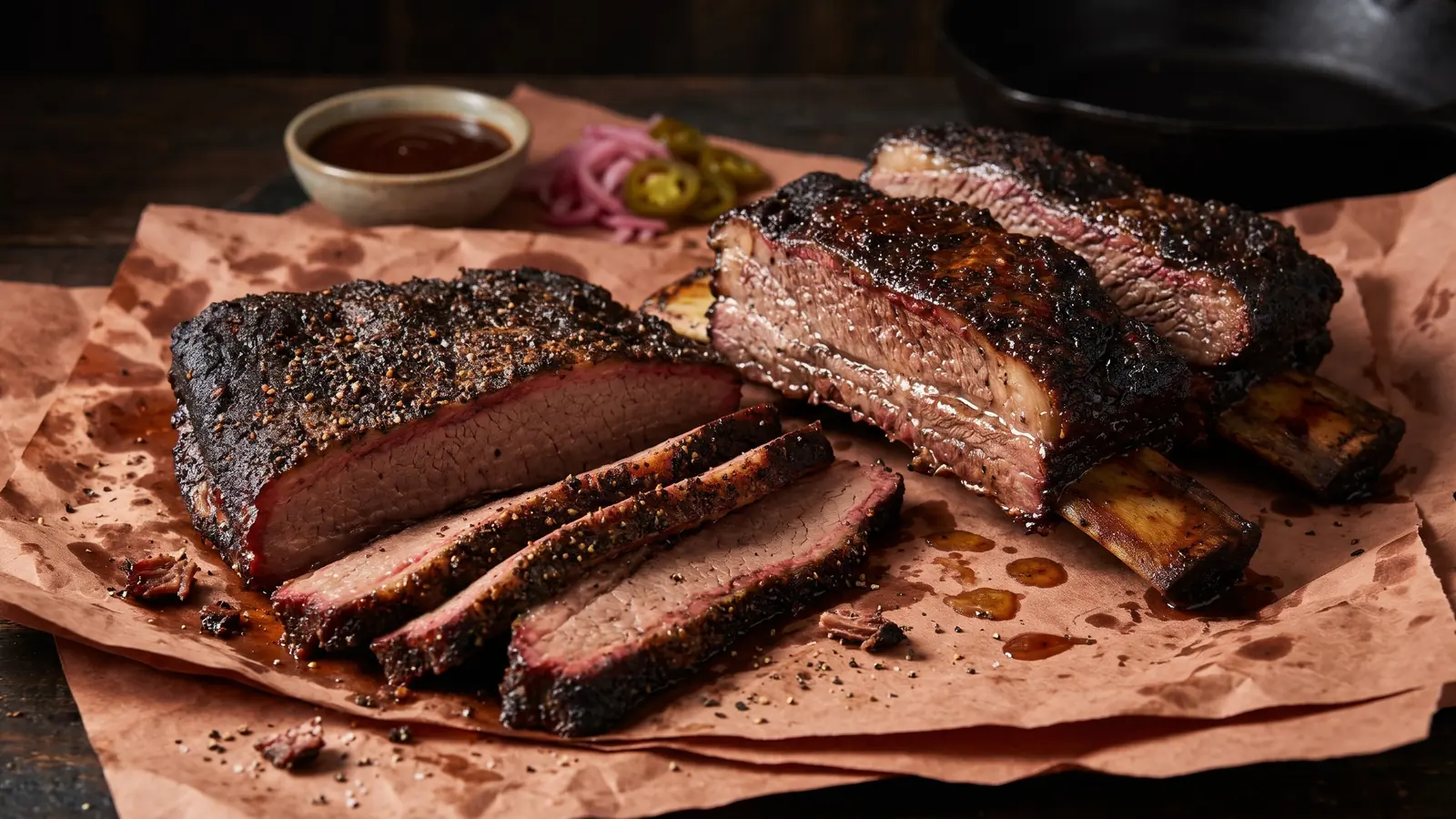
Brisket is a large cut from the chest of the animal, made of two muscles, the flat and the point, that are tough and fatty until cooked slowly. It is the cut behind Texas smoked brisket.
The flat is leaner and slices neatly, while the point is fattier and often used for chopped or burnt ends. Because the chest muscles support the animal’s weight, the meat is dense with connective tissue, and it needs hours of low heat to turn tender. Brisket is sold whole or in pieces, and a butcher can trim it to your preference.
What do the numbers on ground beef mean?
The numbers on ground beef, such as 80/20, show the ratio of lean meat to fat by weight. An 80/20 grind is 80 percent lean and 20 percent fat.
Fattier grinds are juicier and suit burgers, while leaner grinds suit sauces and dishes where the fat would pool. The cut used for grinding varies, with chuck, round and sirloin among the common sources. Ground beef carries a higher food-safety risk than a whole steak because bacteria on the surface get mixed through, so cook it to 160 F.
What are short ribs and beef ribs?
Short ribs and beef ribs are bone-in cuts from the rib and plate areas, rich in fat and connective tissue, and they are cooked low and slow. Short ribs are usually cut into small, meaty blocks, while beef back ribs and plate ribs are larger.
Both are favorites for braising and smoking. Beef ribs have big bones, plenty of fat and a deep flavor, and they take a long time to cook. Because they are fatty, they shrink a good deal during cooking, and the cooked yield is much less than the raw weight.
Why do beef cut names change from place to place?
Beef cut names change because regions, stores and traditions divide the carcass in different ways, and the same piece may carry several labels. A cut can be called one thing in Texas, another in California and another in a grocery chain.
This is why describing the cut helps: where it sits on the animal, whether it has a bone and how you plan to cook it. If you are following a recipe and cannot find the named cut, show the recipe to the counter and ask for a match. Tri tip is a good example, and the guide to it on this site covers the names it goes by.
Which beef is on the Bud’s House of Meat menu?
The Bud’s House of Meat ordering page lists beef in cooked form, on its menu as recorded in November 2026, and does not itemise raw cuts. The beef items are brisket, sliced and chopped beef, and beef sausage.
| Item | Price | Note on the page |
|---|---|---|
| Smoked Brisket Dinner | $19.95 | Slow-smoked brisket, lean or loose (with fat) |
| Brisket (1/2 lb) | $13.50 | Slow-cooked brisket, lean or loose |
| Sliced Beef Sandwich | $13.95 | Served with chips and a drink |
| Chop Beef Sandwich | $13.95 | Chopped beef, with chips and a drink |
| Cup of Chop | $7.80 | Cup of chopped beef |
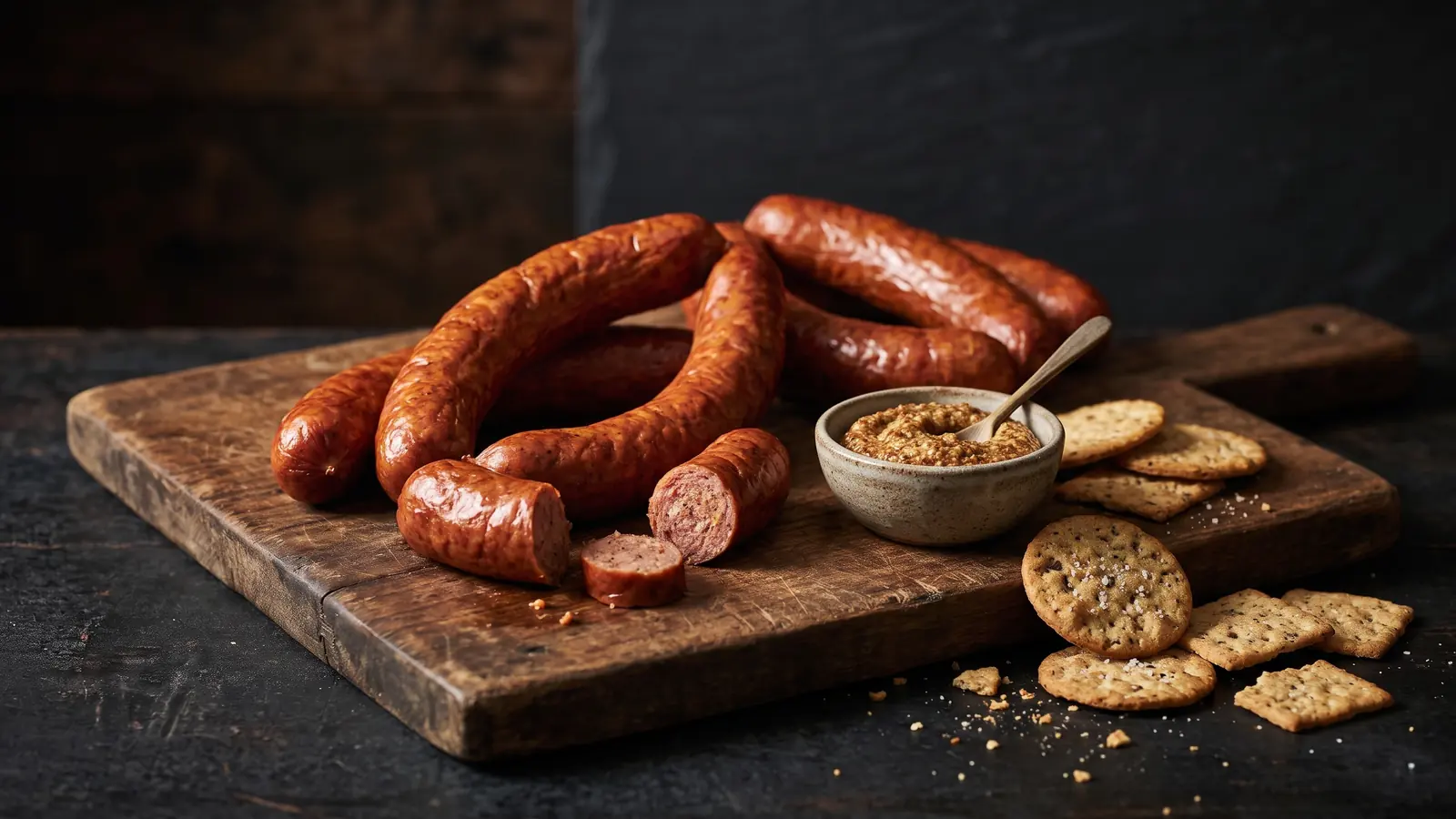
| Beef Sausage (1 lb) | $9.95 | Beef sausage |
| Whole Brisket | $249.50 | About 10 lb of slow-smoked brisket, allow two days |
The page does not say which primal the sliced or chopped beef comes from. The fresh meat counter, meaning raw cuts and family meat packs, is not itemised online, so we cannot say which steaks or roasts are sold there. Call (713) 733-4363 to ask. The official website, budshouseofmeat.com, links to the ordering pages and orders are placed there, not here. See the menu page for every recorded item.
How do you read a meat counter?
Look for the cut name, the price per pound and any trim notes, and ask about anything that is unclear. A good counter will tell you how a cut is best cooked.
Useful questions include: is this cut lean or marbled, is it bone-in, how thick is it, and what do you suggest for a grill or a slow cooker. If the label has a name you do not recognize, ask where on the animal it comes from. The guide to meat markets on this site covers how to order at the counter.
How do you buy and store beef?
Buy beef that is bright red on the surface with white or cream fat, keep it cold on the way home and refrigerate it promptly. Cook or freeze it within a few days of buying.
For freezing, wrap tightly and press out air. Thaw in the refrigerator. Keep raw beef separate from cooked or ready-to-eat food, and use a clean board and knife. A guide to freezer burn on this site covers storage in more detail.
Common questions
What is the most tender cut of beef?
Tenderloin, cut from along the spine inside the loin, is generally considered the most tender. It is also lean and mild, so many people prefer other cuts for flavor.
What is the difference between a steak and a roast?
Steaks are thinner cuts for quick cooking, while roasts are larger pieces cooked whole. The same area of the animal can supply both.
What is marbling?
Marbling is the thin streaks of fat inside the muscle. More marbling usually means more flavor and tenderness, as in a ribeye.
Which cuts of beef are best for slow cooking?
Tougher, well-worked cuts such as chuck, brisket and shank do well with long, moist or smoky cooking, which turns connective tissue tender.
Do cut names differ by region?
Yes. The same cut can have different names from one region or store to another, so describing the location on the animal and how you plan to cook it helps.
Planning a visit? Start with Bud's Meat Market on Cullen: address, opening hours, menu and directions in one place.
This article is general information from an independent guide, not from Bud's House of Meat itself. For the store’s current details see hours and location.