Short answer
Hot links are spicy smoked sausages, usually all beef with a coarse grind and a red-pepper kick. They are a staple of Texas barbecue, and Bud’s House of Meat does not list them by that name on its recorded menu.
Hot links are spicy smoked sausages, usually made of beef, with a coarse grind and a strong red-pepper heat. They are a regular on Texas barbecue counters, where they are sold by the link or by the pound beside brisket and other smoked meats. This guide explains what hot links are, where the style comes from, how East Texas and Chicago versions differ, and how they relate to the sausages listed on the Bud’s House of Meat menu in Houston.
What are hot links?
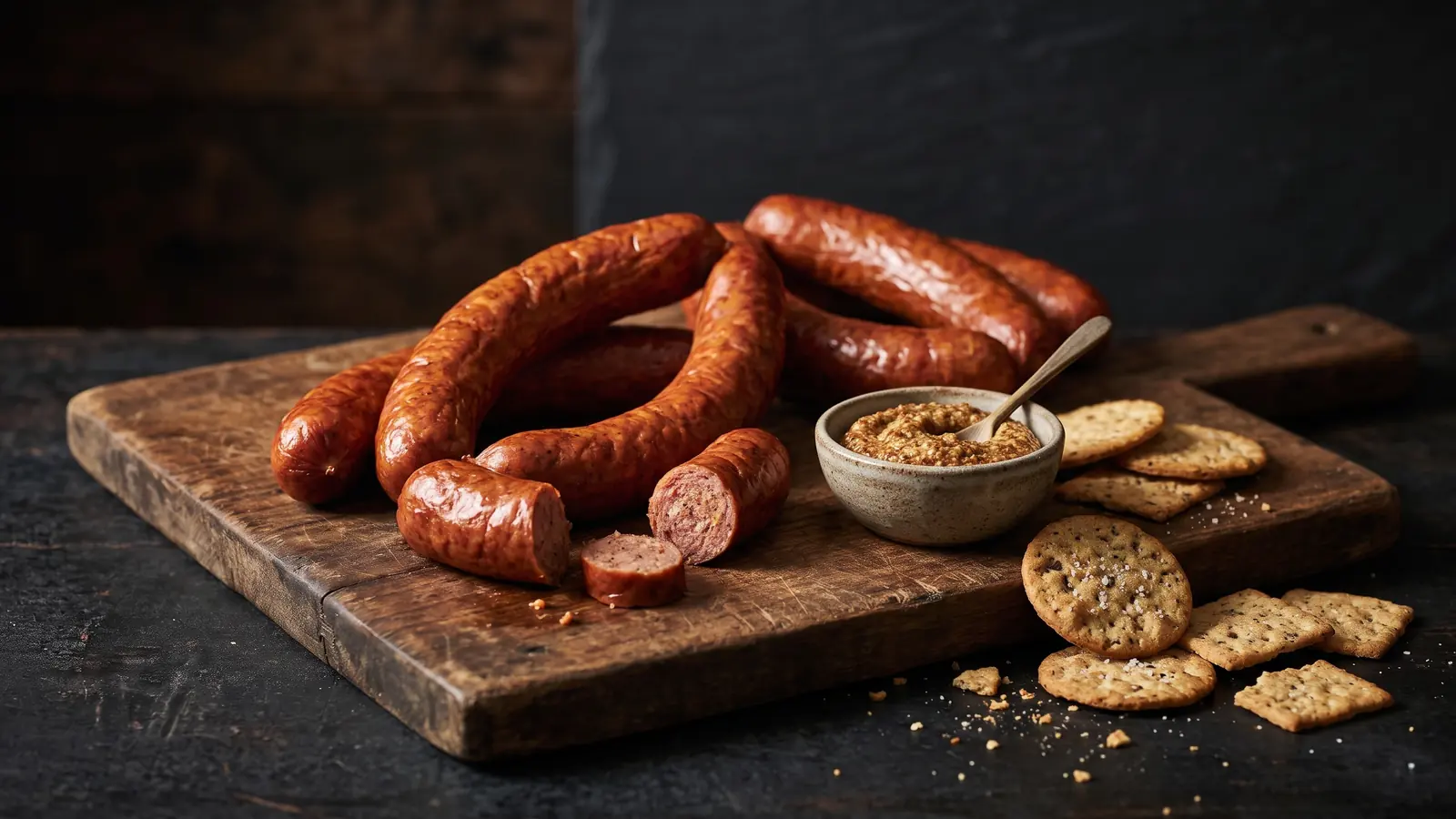
Hot links are smoked sausages seasoned with a generous amount of red pepper, black pepper and salt, in a casing, and eaten warm. They are typically beef, with a coarser texture than a hot dog and a snappy casing.
There is no legal or universal recipe, so the name covers a loose family. Most share three traits: a noticeable heat, a smoky flavor from the smokehouse or pit, and a coarse, meaty texture. Some are packed with a bit of fat to stay juicy, others are leaner. The heat can range from medium to quite hot.
Where do hot links come from?
Hot links in the Texas barbecue tradition are linked to the sausage-making of the state’s German and Czech settlers and to the meat markets that grew into barbecue joints. Black barbecue traditions in East Texas and the South also shaped the spicy, red-pepper style that many people call hot links.
The exact origin is not pinned to one town or one cook, and writers on Southern and Texas food tell the story in different ways. What is clear is that smoked sausage has long been part of Texas barbecue, and that spicy versions gained their own name and following.
What are East Texas hot guts?
Hot guts is a name used in parts of East Texas for a spicy, smoked sausage similar to hot links, and the two terms are often used for the same thing. The name is a local and playful one, and it can refer to a sausage with a particular recipe from a specific shop.
In practice, a hot gut and a hot link are both spicy smoked sausages, and the difference is mostly in local naming and in each maker’s recipe. If you are in East Texas and a menu says hot guts, ask what is in it, because the heat and the meat can vary.
What is a Chicago hot link?
Chicago hot links are a spicy smoked sausage, often beef, served in the city’s barbecue joints, frequently on a plate with fries or on white bread. The style is closely tied to Chicago’s Black barbecue tradition, and it is a regional cousin of the Southern version.
The ties between Chicago and the South run through the Great Migration, when many Black families moved north and brought their food traditions with them. The details of how each dish arrived are told in different ways, so treat any single origin line with caution.
How are hot links different from other smoked sausages?
Hot links are spicier and usually coarser than a standard smoked sausage, and they are more likely to be all beef.
| Sausage | Heat | Typical meat | Texture | Typical use |
|---|---|---|---|---|
| Hot links | Medium to hot | Beef | Coarse | Barbecue plates, sandwiches |
| Smoked sausage | Mild to medium | Beef, turkey or chicken | Fine to medium | Grilling, beans, plates |
| Smoked chicken sausage | Mild to medium | Chicken | Medium | Gumbo, jambalaya |
| Polish-style sausage | Mild | Beef | Medium | Grilled, sandwiches |
| Turkey sausage | Mild | Turkey | Fine | Skillet, in a bun |
These are general descriptions, and individual products vary a lot. If a label says “smoked sausage” and you want heat, read the ingredients for pepper and ask the seller.
How do you cook and serve hot links?
Hot links are usually fully cooked and only need heating, so cook them gently on a grill, in a pan or in an oven until hot through. Moderate heat keeps the casing from splitting.
On a barbecue plate they are often sliced into rounds or served whole next to brisket and sides. At a counter, they might be sold by the link, as a sandwich or as part of a combination plate.
Simple serving ideas:
- On a plate: whole or sliced, with white bread or crackers, pickles and raw onion.
- In a sandwich: on a bun or white bread with mustard or barbecue sauce.
- With a combo: beside brisket or smoked turkey for variety.
- In a pan: sliced and browned with onions and peppers.
If you are not sure whether a link is raw or fully cooked, cook it to the USDA figure for fresh sausage, 160 F for beef, with a food thermometer.
How hot are hot links?
The heat varies by maker, from a gentle warmth to a strong burn, and there is no standard scale. Red pepper is the main source of heat, and the grind and the fat content affect how it feels in your mouth.
If you are new to hot links, start with a slice and eat it with something starchy or cool, such as white bread, potato salad or pickles. Dairy and sweet drinks help calm heat. A spoonful of potato salad or a slice of white bread between bites also softens the burn, and many people keep a cold drink close at hand when trying a new maker’s links for the first time. For anyone with a medical reason to avoid spicy food, follow your own advice and ask the seller for details.
What should you look for on a hot link label?
Look for the meat, the casing type and whether the sausage is fully cooked. Those three details tell you how to heat it and whether it suits your table.
- Meat: beef, turkey or chicken, which matters for taste and for dietary needs.
- Cooked status: “fully cooked” or “ready to eat” means heating only. “Keep refrigerated, cook thoroughly” means raw.
- Heat clues: red pepper, cayenne, crushed chili or hot sauce in the ingredients.
- Casing: natural casing gives a snap, while some casings are not meant to be eaten.
- Added items: cheese, jalapeno or other fillings in some products.
Labels at a meat counter may be missing, so ask. A seller who makes the sausage can usually tell you what is in it.
Are hot links the same as hot dogs?
No. A hot dog is a finely emulsified, mild, cooked sausage, while a hot link is coarser, spicier and smoked. The two are sometimes served in a bun, which causes the confusion.
Hot dogs have a smooth, uniform texture and a mild seasoning, and they are usually boiled or grilled. Hot links keep a visible grain, have a stronger flavor and are often eaten on their own or on a plate. If a recipe asks for hot links, a hot dog will not give the same result.
Why are hot links so common at barbecue counters?
Sausage was part of the meat market tradition that barbecue grew from, and it is easy to sell by the link or the pound. It also keeps well in a smoker and holds heat on a steam table, so it suits a busy counter.
Texas barbecue counters traditionally sold meat by weight, and sausage fit that system. A link could be added to a plate or eaten in a sandwich with a slice of bread. That history is general, and individual shops have their own stories.
Are hot links on the Bud’s House of Meat menu?
Not under that name. The Bud’s House of Meat ordering page, on its menu as recorded in November 2026, lists Beef Sausage by the pound at $9.95, not hot links, and this guide’s menu listing does not include any other sausage.
Nothing on the ordering page says the beef sausage is spicy, so this guide does not call it a hot link. To ask about heat, call (713) 733-4363. The official website, budshouseofmeat.com, links to the ordering pages and has no menu of its own, and this guide takes no orders. See the menu page for the recorded list.
How do you choose and store hot links?
Choose links that look plump and even, with an intact casing, and ask the seller whether they are fully cooked. Keep them cold until you are ready to heat them.
Store in the refrigerator for a few days, or freeze them wrapped tightly. Reheat until steaming. Cooked leftovers should be refrigerated promptly.
If you plan to serve them to a crowd, ask about the heat level, because what one person calls mild another may find strong. Offering a milder sausage alongside is a considerate choice.
What drinks and sides go with hot links?
Cooling, starchy and tangy sides balance the heat. Potato salad, beans, coleslaw, pickles, white bread and crackers are all classic, and a cold sweet tea or soft drink is a traditional match.
Pickles and raw onion cut through the fat and clear the palate between bites. For a plate, a link and one other meat, such as brisket or smoked turkey, make a good pair.
Common questions
What are hot links made of?
Usually beef, with salt, black pepper and a good amount of red pepper, packed in a casing and smoked. Recipes vary by maker.
What is the difference between hot links and hot guts?
Hot guts is an East Texas name for a similar spicy sausage, and the terms are often used for the same food. Exact recipes differ by region and maker.
Are hot links the same as Polish sausage?
No. Polish-style sausage is a mild, garlicky smoked sausage, while hot links are spicier and usually coarser. Chicago menus sometimes serve both.
Are hot links fully cooked?
Many are smoked and fully cooked, but some are sold raw. Check the label or ask the seller, and cook raw sausage to a safe internal temperature.
What do you eat with hot links?
White bread or crackers, pickles, onion, mustard and barbecue sauce are common partners, and links often sit on a plate beside other smoked meats.
Planning a visit? Start with Bud's Meat Market on Cullen: address, opening hours, menu and directions in one place.
This article is general information from an independent guide, not from Bud's House of Meat itself. For the store’s current details see hours and location.